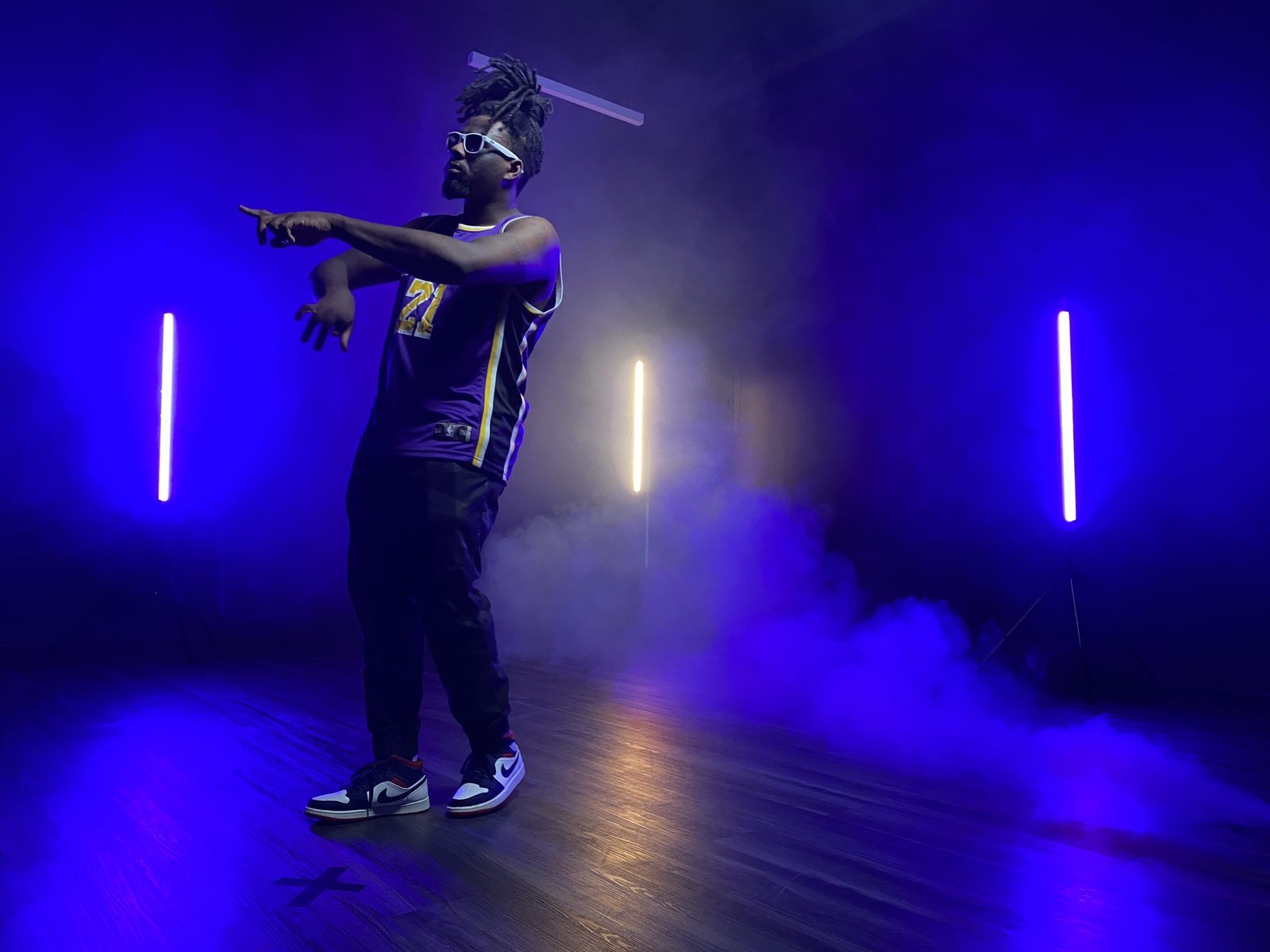
The Providence artist opens up about fatherhood, divine timing, independent ownership and building a legacy one code at a time
For Tye Cooper, Cooper Codes is more than the title of a new album. It is a blueprint built from experience—every lesson learned, boundary established, relationship valued and risk taken throughout his evolution as an artist, father and entrepreneur.
Released on Cooper’s 33rd birthday, the 10-track album arrives at a moment filled with striking synchronicities. The completed project runs for 33 minutes, documenting a period in which the Providence, Rhode Island artist became a father, grew his TikTok community from approximately 1,000 followers to more than 50,000, toured with Curren$y and Jay Electronica, performed at the FIFA World Cup Fan Festival in Philadelphia and continued strengthening the independent infrastructure around his career.
That growth can be heard in the intention behind the album. Cooper Codes brings together introspective lyricism, soulful production, social observation and personal storytelling without sacrificing replay value. The project features BETHLYVI, BLAQ SAV, Che Noir, ElCamino, DirtyDurtie, OT The Real, Othannah Tomasina and JONE$, with production contributions from Jon Scino, Angel Beats, Atomic, Gwapstar Mon and others.
Yet its emotional center is family. Cooper describes the album as an architectural record of the man he has become and the values he hopes to pass down to his son, Quincy. That idea reaches its fullest expression on the closing track, Architectural Digest, which features the voice of his grandmother, Diana Cooper—the matriarch who helped form his foundation—asking about the next generation.
The album also reflects Cooper’s commitment to Providence. From the locally resonant opening track Richmond Rentals to his thoughts on moving beyond the limits sometimes placed on artists from smaller markets, he treats his hometown as both a source of identity and a foundation from which to expand.
In this in-depth conversation with WAJ Magazine's own Bridget Papino, Tye Cooper explains the principles behind Cooper Codes, how fatherhood sharpened his purpose, why “boring consistency” became central to his growth, and what independent artists must understand about turning visibility into lasting ownership.
The Interview
1. Congratulations on the release of Cooper Codes. How does it feel to finally have this project out in the world?
Thank you. I’m just really glad Cooper Codes is finally out in the world. There’s something special about watching something that started as an idea in my mind become something people can actually listen to, experience and make their own. The process behind this project was very different from any of my previous releases, especially creating it after becoming a parent and tying this chapter of my life to my birthday. It feels like all the corners of the board finally connected.
2. You chose to release the album on your birthday. What personal meaning does that date hold for you, and why did it feel like the right moment to begin this new chapter?
My birthday happened to fall on a Friday this year, which already felt significant because release days and my birthday don’t usually align like that. I was turning 33, and somehow the finished album ended up being 33 minutes long. I’m big on divine timing, synchronicity and recognizing when things seem to connect for a reason. After touring with Curren$y and Jay Electronica, performing at the FIFA World Cup Fan Festival in Philadelphia, and documenting this chapter through my Cooper Codes vlog series, building the release around my birthday felt like the natural culmination of everything I had been experiencing. To me, it’s really a collection of maturity and a timestamp of who I became during this period of my life.
3. What does the title Cooper Codes mean to you? What “codes” or principles have guided you throughout your life and career?
Cooper Codes represents the lessons I’ve collected throughout my life and career, including the things I got right, the things I misread, and the things I had to learn the hard way. I look at life like putting one brick down every day. Eventually you step back and realize those experiences have built something, and the principles you picked up along the way became the blueprint. A lot of my codes come down to protecting your peace, valuing your relationships, staying consistent, recognizing divine timing, maintaining your independence, and understanding that every opportunity isn’t necessarily meant for you. The album is really me documenting the architecture I’ve built from those lessons while also recognizing what was passed down to me and what I’ll eventually pass down to my son.
4. If this album gives listeners the code behind the man and the artist, what do you hope they understand about Tye Cooper by the time the final track ends?
I hope they understand that I’m an intentional person. I started from my grandmother’s basement, and over the years this journey has given me access to rooms, people, places and experiences I once could only imagine. But access means very little if you don’t apply the wisdom you gain from it. By the time Architectural Digest ends, I want people to hear someone who took those experiences, lessons and manifestations and actually built something with them. Cooper Codes is the architecture of that growth made tangible, something that once existed only in my mind that people can now walk into and experience for themselves.
5. The project explores growth, ambition, fatherhood, perseverance, and social realities. Which of those themes challenged you the most to write about honestly?
Growth and perseverance were probably the most challenging because being honest about growth meant acknowledging the distance it sometimes creates. As I became more intentional with my time, especially after becoming a father, there were people close to me who interpreted my absence from certain functions or spaces as me disconnecting. The truth was that I was learning balance. I could still be outside, perform and participate in nightlife, but I also became comfortable being home with my family, building through TikTok Live, writing, recording and being more selective about where my energy went. I always say, “Since becoming a parent, everything became apparent,” and this album forced me to be honest about the fact that growth sometimes means accepting that people may have a different relationship with who you’re becoming than they had with who you used to be.
6. How has fatherhood changed the way you approach your music, your career decisions, and the legacy you want to leave behind?
Fatherhood gave everything a different level of intention. My son was born on 2/22, a number that already had significance to me through music and my belief in synchronicity, so even his arrival felt like one of those moments where life and art connected in a way I couldn’t have planned. Since becoming his father, I question my decisions differently: Do I really need to be there? Is this worth my time? No matter whether I’m performing, traveling or out of the country, the end goal is always making it back home to my son. That consciousness has entered my music too. I still love layers, double meanings and speaking in codes, but fatherhood has made me more precise about what I’m actually trying to say and what I’m putting into the world. I’m not only thinking about making great music anymore; I’m thinking about creating something my son can inherit and understand about who his father was.
7. What was happening in your life while you were creating Cooper Codes, and how did those experiences shape the direction of the album?
My life changed tremendously while I was creating Cooper Codes. I became a father, invested in my own recording equipment and started engineering myself more seriously, which gave me another level of independence in how I created. I also began going live on TikTok every day after starting with around 1,000 followers in December 2025, and in less than a year that community grew to over 50,000. At the same time, I was touring with some of my favorite artists, performing at places like the Providence Performing Arts Center and the FIFA World Cup Fan Festival, receiving a citation from the City of Providence, and traveling internationally for the first time with my family. What made that period special was that my career was expanding while I was learning how to be present as a father, sometimes even bringing my son onstage with me. Cooper Codes became a reflection of that contrast: seeing more of the world while becoming increasingly clear about what home means to me.
8. You’re known for balancing substance-driven lyricism with music that still has replay value. How do you maintain that balance without compromising your message?
I have an old soul, and I grew up listening to records that proved substance and replay value never had to be opposites. Whether it was Motown and artists like Marvin Gaye, Smokey Robinson and Curtis Mayfield, or politically charged records like “Self Destruction” and “Fight the Power,” I was always fascinated by music that could say something important and still make you want to hear it again. As I got older, artists like Black Thought and Ab-Soul showed me how intricate you could be with language, references and ideas without losing the music itself. I love movies, wordplay and pulling references from different eras, so my approach has always been to let the old and new coexist. Cooper Codes contains a lot of wisdom, but I never want wisdom to feel like a lecture. If I can give you something to think about while still giving you a record you want to run back, that’s the balance.
9. Which song on the album feels most personal to you, and what is the story behind it?
Architectural Digest is probably the most personal record for me because it feels like the final walkthrough of everything Cooper Codes represents. If the album were a building, tracks one through nine take you through the different rooms, experiences, history and layers that went into constructing it, and by the final record you’ve had a chance to digest every square foot. My grandmother, Diana Cooper, is featured on the song, and she’s the matriarch of the Cooper foundation in my eyes. Earlier on Quincy’s Favorite Song, I talk about her driving me to open mics when I was younger, and then the album eventually closes with her voice asking about my son and telling me to give Quincy a big hug for her. There’s something powerful about having the woman who helped build my foundation speaking about the next generation at the end of an album about everything I’m building. Between that and the instrumentation, especially the saxophone, I still get emotional and shed tears listening to it.
10. Was there a particular lyric, verse, or recording session during which you realized the album had fully come together?
I think the first real moment was recording Richmond Rentals. Hearing that record come through the speakers was the first time I could say, “Okay, what I’ve been hearing in my head actually sounds like this in real life.” But honestly, every Cooper Codes session reinforced that feeling. I’ve become obsessed with what I call “boring consistency,” so I would spend nights before a session planning verses, ad-libs, sequencing and exactly what I wanted to accomplish, which allowed me to maximize every hour in the studio. We even held what felt like a Cooper Codes producer camp, with different producers coming through and playing music, and I became very intentional about choosing records that belonged to the concept rather than beats that simply sounded good. By the end, every session felt like another piece of the portrait becoming a spitting image of what I had originally seen in my head.
11. What made each collaborator the right fit for this body of work?
Every collaboration was intentional. BETHLYVI is a close friend and an incredible vocalist who became almost like a recurring texture throughout the album, adding layers to records like Richmond Rentals, Quincy’s Favorite Song and Kristen’s Interlude without even knowing initially how much those contributions would become part of the larger concept. Othannah Tomasina is someone I’ve known for over a decade in the Providence music scene, and her presence on The Wild Side helped me create the soulful homage I wanted while playing with some of the musical influences I grew up on. BLAQ SAV comes from Rhode Island’s comedy and entertainment scene, so having him appear around Freedom of Speech allowed the album to include some reality and personality from people who know Tye Cooper beyond the music. Che Noir and ElCamino represent relationships I’ve wanted to explore musically for years, especially through my connection to Buffalo, Black Soprano Family and the larger Griselda family tree. J9NES, DirtyDurtie and the other Rhode Island voices come from genuine relationships built over years, not names I went searching for when it was time to make an album. I wasn’t interested in stacking features for the sake of having features. I wanted people who naturally belonged somewhere inside the architecture of Cooper Codes.
12. How did producers such as Jon Scino, Angel Beats, Atomic, and Gwapstar Mon help shape the album’s sound and emotional range?
The producers were essential because the sound of Cooper Codes came together through a combination of history and discovery. Gwapstar Mon and I already had a creative relationship from previous releases, so his production became a major part of the album’s sonic foundation. Atomic produced Same Dream, which was actually a record I had in the vault for nearly three years before I realized it belonged on this project. Angel Beats was similar in that I had been sitting with the beat that eventually became Walk on Water for years; when I invited him to the Cooper Codes production camp, it reminded me that sometimes the right production is already in your possession and you just haven’t lived the experience that tells you what to do with it yet. Jon Scino is someone I’ve known through the local music scene for over a decade but had never really worked with, and the production camp finally gave us that opportunity, resulting in Kristen’s Interlude, one of the album’s most meaningful records to me. Each producer brought a different emotional texture, but the challenge was making sure every beat served the story rather than simply making the album because it sounded good.
13. Where can listeners hear your influences on Cooper Codes, and where does the project sound uniquely like you?
I think those influences are present throughout the project, but more in my approach than in me trying to sound like any particular artist. With Jay-Z, I’ve always studied the bravado, storytelling and the way he can change cadence or perspective within a few bars, and you can hear some of that energy in Richmond Rentals. Black Thought influenced my technical approach to vocabulary, description and finding pockets, which comes through on records like The Wild Side. Queen Latifah is a huge influence on my presence; I’ve always admired how commanding and raw she can be without needing profanity or compromising the center of who she is. Jill Scott and Marsha Ambrosius taught me a lot about soul and emotional intention, especially when writing about love and relationships. Ultimately, though, all of those influences are filtered through my own experiences, references, humor and perspective, and that’s what makes Cooper Codes sound like Tye Cooper rather than a collage of the people who inspired me.
14. What have sharing stages with respected hip-hop artists taught you about commanding a stage and holding your own?
Early in my career, sharing stages with artists like Rakim, Slick Rick and KRS-One taught me that commanding a stage starts long before you touch the microphone. I would pay attention to how established artists entered venues, interacted with staff, moved with their teams and protected the environment around their performance. I’ve always treated security, venue staff and everyone working a show with respect, and sometimes that kindness gave me access early enough to quietly observe the infrastructure behind a major performance. More recently, going live on TikTok every day gave me constant practice holding a room, reading an audience and adjusting my energy in real time. So by the time I was performing at places like Sony Hall and touring with Curren$y and Jay Electronica, I still had nerves, but commanding the stage felt natural because I had already built the architecture for occupying that space. Those experiences taught me that you don’t suddenly become ready for a bigger stage when you arrive there; you prepare for it through how you handle every smaller room along the way.
15. How did SU & TYE and your connection with Black Soprano Family prepare you for this solo chapter?
My relationship with Black Soprano Family really started after performing at the Cultivators Cup, where I eventually met Benny the Butcher and recorded with him. That relationship introduced me to the larger infrastructure around BSF, and over time I went from doing individual collaborations to performing on their SXSW stage, touring, traveling and becoming a familiar face within that ecosystem. Through Harlem Zone, I connected with Sule, and after we worked together on Black Boys Deserve to Smile, the chemistry was strong enough that I went to Atlanta and we recorded SU & TYE together over the course of a weekend. That experience taught me how powerful repetition and presence are: when you consistently show up in different markets, people who once saw you as a stranger eventually recognize your work and your story. SU & TYE also gave me room to sharpen my craft before returning to a fully solo body of work. By the time I started building Cooper Codes, I felt light-years ahead of the artist I was when that collaborative chapter began.
16. How has Providence shaped your voice, and what do you want your success to represent for other artists coming out of Rhode Island?
Providence shaped me because it’s a small place with an incredibly specific identity. Everybody knows everybody, there are shared experiences and references, and that’s part of why I opened Cooper Codes with Richmond Rentals. To somebody outside Rhode Island it’s a title, but if you’re from Providence, you immediately understand the reference and the culture attached to it. At the same time, Providence has historically dealt with a crab-in-a-barrel mentality where proximity doesn’t always translate into support, even though I’ve watched that improve over the years. I’ve learned to look at Providence almost like a lid: you have to be willing to remove it, experience what exists beyond your immediate environment, and then know how to come home without putting that lid back over your own imagination. Traveling taught me that I could be Tye Cooper in Providence, Philadelphia, Atlanta or another country because my identity travels with me. Ultimately, I want another artist from Rhode Island to look at what I’ve built and understand that where you come from can shape you without determining the ceiling of where you can go.
17. What has been the most rewarding part of building independently, and what has been the hardest lesson?
One of the most rewarding things about building independently is realizing that independent doesn’t have to mean alone. Dan Murphy has been an important part of my journey since 2019 and really became a bridge between the period when I was Messy Tye and fully stepping into Tye Cooper. I brought years of DIY experience and boots-on-the-ground knowledge of music, while Dan brought a different financial and business perspective, and together we’ve been learning what building real infrastructure around an independent artist actually requires. Earlier in my career, I thought getting signed meant somebody would eventually build that infrastructure for you, but social media and platforms like TikTok have shown me that I can be the engine that brings an audience directly into my own universe without sacrificing who I am. The hardest lesson has been accepting that even when I prepare meticulously and believe I’ve done everything correctly, things can still go wrong, and the people around me aren’t always going to think, communicate or solve problems exactly the way I would. Independence has taught me to adjust without allowing every imperfection to hijack the larger mission, while still protecting my identity, ownership and ability to express myself completely.
18. How do you turn visibility into genuine community without losing authenticity?
For me, the difference between visibility and community is participation. My niche on TikTok started with freestyling people’s names from the comment section, and within minutes I can have hundreds of people actively participating in the Live and eventually 20,000 or more people passing through over the course of a session. But “boring consistency” is what transformed that visibility into something deeper. Going live for hours almost every day allowed me to recognize returning names, watch strangers become regulars, and eventually see people follow the music outside of TikTok, buy merchandise, support financially and genuinely become invested in my journey. They’ve also watched me be a father in real time. Some people have been watching Quincy grow since I was holding him during Lives last December, so they aren’t only seeing Tye Cooper the artist; they’re seeing the person, the father and the routine behind everything I’m building. I’ve even had people ask me to create something personalized for a sick family member or someone they love, and moments like that remind me that this has become bigger than numbers on a screen. A viewer watches the show. A community member feels like they’re part of it.
19. What do independent artists misunderstand most about consistency, ownership, and building a sustainable career?
The biggest thing independent artists have to understand is that nobody is coming to save you. People can give you information, opportunities and examples, but ultimately you still have to do the work and figure out how those lessons apply to your own journey. I also think “grinding” can create the illusion of progress because being busy, collaborating constantly or showing up everywhere doesn’t necessarily mean you’re ascending. You can look like money without actually making money, and you can look consistent while repeating the same cycle. I think about it like racing: you can lap somebody and still technically be driving in a circle, so the question is whether your consistency is actually accumulating something: a stronger catalog, a real audience, ownership, relationships, revenue or infrastructure. I’ve also learned not to build a career around chasing viral moments because virality can introduce you to thousands or millions of people without giving them a reason to stay. Sustainable growth is when the attention compounds into something you still own after the moment is over.
20. What does success for Cooper Codes look like beyond streams, views, and numbers?
Success for Cooper Codes is longevity. I want Quincy, who is already showing an incredible sense of rhythm at a year and a half, to grow up and eventually understand what his father was building during this period of our lives, and maybe one day inherit parts of that creative architecture himself. I want to see people quoting the codes, applying them to their own lives, maybe even tattooing words from the album because something connected with them that deeply. I also want the project to remain a timestamp of turning 33: a 33-minute album created during a period when I was performing at places like the Rhode Island Convention Center and on the steps of Newport City Hall while simultaneously learning how to be a father, artist and entrepreneur. Years from now, I want someone on the other side of the world to know every word to Richmond Rentals without ever having stepped inside one. If Cooper Codes can keep traveling, create opportunities I can’t currently predict, and become more meaningful as the life I’m documenting continues to unfold, then it did exactly what it was supposed to do.
21. If someone is discovering Tye Cooper for the first time through this album, which track would you tell them to start with, and why?
I would tell them to start with Terms & Conditions. That record probably gives the clearest understanding of the person I’ve become because I’m taking inventory of what I’ve experienced, what I’ve learned from it and the standards I now have for myself and the people entering my space. The title isn’t only about establishing boundaries for other people; those terms and conditions apply to me too if I want to continue becoming the best version of Tye Cooper. I look at the song almost like seeing someone covered in scars and finally being given the story of where each one came from. It explains why I value prayer, discernment, protecting my ambition, recognizing genuine support, not skipping steps and understanding that proximity doesn’t automatically equal access. It isn’t the beginning or ending of Cooper Codes, but if you want to understand the operating system behind the person navigating everything in between, that’s the record I’d start with.
22. What can fans expect next from the Cooper Codes rollout in terms of visuals, live performances, or additional content?
There’s definitely a lot more coming. We shot the official visual for Freedom of Speech featuring ElCamino during the album release weekend, with BLAQ SAV also appearing in the video, and there are additional visuals from the project that we’re developing. I’ve already started performing material from Cooper Codes, and we’re currently having conversations around bringing the album into more live spaces and eventually touring the project. The Cooper Codes vlog series will continue documenting the life around the music, and TikTok will remain an important part of how I connect with people and bring them into the world in real time. We’re also expanding the merchandise and continuing to build appearances, interviews and other content around the album. The goal is for Cooper Codes to keep unfolding rather than treating release day like the finish line.
23. After listeners spend time with Cooper Codes, what conversation do you hope the album creates?
I hope Cooper Codes makes people turn the mirror on themselves. I want someone to ask, “Am I actually the architect of my life, or have I allowed other people to have more hands on what I’m building than I do?” Am I creating my own light or living in proximity to somebody else’s? Are the boundaries I’ve created protecting something meaningful, or am I confusing healthy distance with disconnection? Most importantly, I want people to stop viewing themselves as finished products and honestly assess the architecture of their own lives: their relationships, habits, decisions, values and what they’re ultimately building toward. The question isn’t how do I make my life look more impressive; it’s what can I genuinely strengthen in the foundation that’s already there?
24. What is the next code Tye Cooper plans to unlock?
The next code is expansion without dependence. I want to perform overseas and meet the international audience I’m already beginning to see online, tour on a larger scale, explore more sync licensing and placements, and build meaningful relationships with brands and platforms that recognize the value of what I’ve created. But I also want to become increasingly less dependent on other people’s systems by turning the audience and infrastructure I’ve built into things I actually own. Creatively, I see Tye Cooper expanding beyond music into filmmaking, cinematography, acting, entertainment and business, without any of those things feeling disconnected from who I already am. Personally, that expansion means greater financial independence, owning homes, providing for my family and learning how to maintain the things worth preserving once I acquire them. And ultimately, I want to build something Quincy can inherit without deciding for him what he has to become. If Cooper Codes is about becoming the architect of your own life, the next code is learning how to expand the building without giving somebody else the keys.
COOPER CODES LINKS + MEDIA INFORMATION
Listen to Cooper Codes:
Official Website:
Social Media:
@thetyecoopershow across Instagram, TikTok, Facebook and X/Twitter
About Cooper Codes
Cooper Codes is available now on major digital streaming platforms. The rollout will continue with live performances, merchandise, the ongoing Cooper Codes vlog series and additional visual content. An official video for Freedom of Speech featuring ElCamino, with an appearance by BLAQ SAV, is forthcoming.
Follow Tye Cooper at @thetyecoopershow across Instagram, TikTok, Facebook and X/Twitter, and visit TyeCooper.com for additional music and updates.
Frequently Asked Questions
What is the most important thing to know about tye cooper cooper codes interview, providence hip-hop artist, independent hip-hop interview, cooper codes album, tye cooper interview, rhode island rapper, independent music ownership? This guide covers the key facts, practical information, and resources. See the full guide above for details.
Where can I find more information about this topic? Check the official sources linked throughout this guide for the most current information, and follow We Are Jersey at wajmagazine.com for ongoing New Jersey coverage.
Does this apply across all of New Jersey? Most information applies statewide. Notes are included where local variation by municipality or region is significant.